





.avif)
Abogado de accidentes de motocicleta
en Fort Wayne, IN
Para los motociclistas de Fort Wayne, un accidente nunca es solo un accidente. Siempre viene acompañado de suposiciones, como que el conductor iba demasiado rápido, conducía de forma agresiva o que aceptó el riesgo al subirse a la moto. En Theisen Hubley Law, documentamos lo que realmente sucedió, combatimos cualquier prejuicio contra los motociclistas y luchamos por la máxima compensación que nuestros clientes merecen bajo la ley de Indiana.
Reconocimientos y membresías










Un bufete de Fort Wayne que se toma en serio los casos de motocicleta
Nuestro bufete ha apoyado a clientes lesionados en el noreste de Indiana durante más de dos décadas. Las reclamaciones por accidentes de motocicleta funcionan de manera distinta a las de automóviles: las lesiones suelen ser más graves, la evidencia en la escena es más frágil y es más probable que las aseguradoras culpen al motociclista antes de que se aclare la situación.
Desde la primera llamada, aseguramos el informe policial, contactamos a los testigos mientras sus recuerdos están frescos, preservamos las fotografías de la escena y construimos un historial médico claro. Para cuando el ajustador de la aseguradora se prepara para hacer una oferta baja, ya tenemos el expediente listo para rechazarla. Si el caso no puede resolverse de manera justa, estamos preparados para litigar.

Tipos de accidentes de motocicleta que atendemos en Fort Wayne
Los accidentes de motocicleta siguen patrones. Nuestros abogados de accidentes de moto en Fort Wayne han representado a clientes lesionados en muchos de los tipos de colisiones más comunes en las carreteras del noreste de Indiana.
Colisiones al girar a la izquierda
Un conductor que gira cruzando un carril en sentido contrario calcula mal la velocidad de una motocicleta, o ni siquiera la percibe, y se interpone en la trayectoria del motociclista. Según la ley de Indiana, la obligación de ceder el paso recae en el conductor que realiza el giro.
Accidentes por cambio de carril y roces laterales
Un conductor cambia de carril sin comprobar el punto ciego, obligando a un motociclista a salirse de la carretera o llegando a colisionar con la moto. Estos incidentes son comunes en tramos de varios carriles como Coldwater Road y Lima Road, así como en los puntos de incorporación a lo largo de la I-69.
Accidentes de motocicleta por alcance
Las motocicletas frenan más rápido que los coches, y los conductores que mantienen una distancia insuficiente o se distraen pueden chocar por detrás contra un motociclista en una señal de stop, un semáforo en rojo o en medio del tráfico lento. Al no tener una estructura de vehículo que los proteja, los motociclistas suelen salir despedidos hacia adelante tras el impacto.
Accidentes en intersecciones
No ceder el paso, saltarse semáforos en rojo y no realizar paradas completas provocan algunos de los accidentes de motocicleta más graves de la zona. Recopilamos datos de sincronización de semáforos, grabaciones de cámaras de tráfico y declaraciones de testigos para establecer quién tenía la prioridad de paso.
Accidentes por conducción bajo los efectos del alcohol o sustancias
Los conductores bajo los efectos de sustancias no ven lo que tienen delante y no reaccionan a tiempo ante los imprevistos. En Indiana, un conductor con una concentración de alcohol en sangre de 0.08 por ciento o superior se enfrenta a una presunción de intoxicación.
Accidentes por conducción distraída
Un simple vistazo al teléfono es suficiente para no ver una motocicleta. Presentamos reclamaciones por conducción distraída utilizando registros telefónicos, datos de uso de aplicaciones y testimonios de testigos.
Colisiones frontales
Conducir en sentido contrario, invadir el carril central y conducir bajo los efectos de sustancias provocan choques frontales que suman la velocidad de ambos vehículos. A menudo es necesaria una reconstrucción, por lo que trabajamos con expertos cualificados para determinar exactamente cómo ocurrió el accidente.
Accidentes de motocicleta relacionados con Uber, Lyft y servicios de transporte compartido
Los casos de viajes compartidos (rideshare) involucran pólizas de seguro complejas que cambian dependiendo de si el conductor estaba conectado a la aplicación y si llevaba un pasajero a bordo. Identificar cada póliza aplicable es parte de cómo maximizamos la recuperación disponible.
Accidentes de motocicleta con fuga (hit-and-run)
Cuando un conductor se da a la fuga, su propia cobertura contra conductores sin seguro puede convertirse en la vía principal para obtener una indemnización. Ayudamos a los motociclistas a reportar el incidente correctamente, documentar las pérdidas y buscar todas las coberturas que puedan ser aplicables.

¿Sufrió un accidente recientemente en una motocicleta cerca de Fort Wayne?
A menudo, la llamada más difícil de hacer es la primera. Comuníquese con nuestros abogados expertos para obtener ayuda, comparta lo que recuerde sobre el accidente y le diremos con total franqueza si su caso se puede ganar.
Lesiones comunes que vemos en accidentes de motocicleta
Un automóvil protege a sus ocupantes con una estructura de acero, bolsas de aire, zonas de deformación y cinturones de seguridad. Una motocicleta no cuenta con nada de esto, y hasta un choque a velocidad moderada puede dejar lesiones duraderas. Hemos representado a clientes con:
- Lesiones cerebrales traumáticas, incluso aquellas ocurridas mientras se usaba casco
- Lesiones de la médula espinal, incluyendo aquellas que causan parálisis parcial o total
- Abrasiones por fricción con el asfalto, que van desde raspones superficiales hasta heridas profundas que requieren injertos de piel
- Fracturas de pierna, brazo, mano, pie, costillas, cadera y pelvis
- "Brazo de motociclista", una lesión nerviosa que ocurre cuando el conductor intenta amortiguar la caída
- Lesiones internas en el pecho y el abdomen
- Lesiones por aplastamiento cuando el motociclista queda atrapado por otro vehículo
- Amputaciones, tanto traumáticas como quirúrgicas
- Quemaduras por contacto con componentes del motor o el pavimento caliente
- Cicatrices permanentes y desfiguración
- Ansiedad, depresión y otros daños psicológicos tras un choque violento
¿Qué compensación puede solicitar tras un accidente de motocicleta en Indiana?
La ley de Indiana reconoce varios tipos de compensación que un motociclista lesionado, o la familia del conductor en caso de un accidente fatal, podría recuperar.
Daños económicos
Son las pérdidas directas y cuantificables en dólares relacionadas con el accidente, documentadas en facturas hospitalarias, declaraciones de proveedores médicos y registros de nómina. A menudo incluyen:
- Gastos de respuesta de emergencia, hospitalización y cirugía
- Rehabilitación continua, fisioterapia y manejo del dolor
- Atención médica futura cuando las lesiones son permanentes
- Salarios perdidos durante el tiempo que no puede trabajar
- Pérdida de capacidad de ingresos futuros cuando la lesión cambia lo que usted puede hacer para ganarse la vida
- Reparación o reemplazo de la motocicleta, además de cualquier equipo personalizado o accesorio instalado en la moto
- Reemplazo de equipo de protección dañado, incluyendo cascos, chaquetas, guantes y botas
Daños no económicos
Estos abordan los aspectos de una lesión que ninguna factura puede cubrir: el dolor, el sufrimiento, las secuelas emocionales tras un accidente violento, el tiempo perdido lejos de las actividades que le importaban y la tensión en las relaciones cercanas, incluyendo la de su cónyuge e hijos. Los jurados de Indiana reconocen estas pérdidas, y nosotros las presentamos con claridad al negociar o llevar un caso a juicio.
Daños por muerte por negligencia
Cuando un motociclista no sobrevive, la Ley de Muerte por Negligencia de Indiana permite que las familias sobrevivientes presenten una demanda por separado. Las pérdidas recuperables pueden incluir los gastos médicos finales, los costos funerarios y de entierro, los ingresos y servicios que el motociclista habría proporcionado, y la pérdida de amor y compañía.
Daños punitivos
En situaciones poco comunes donde la conducta del conductor fue mucho más allá de la negligencia, como conducir bajo los efectos graves del alcohol o darse a la fuga, la ley de Indiana permite que los jurados añadan daños punitivos. Estos castigan la conducta en lugar de compensar a la víctima y solo se aplican cuando la evidencia los respalda. Sin embargo, existen ciertas restricciones y límites para este tipo de daños.
#cta_start
Una oferta inicial suele ser menor de lo que vale la reclamación
Las compañías de seguros actúan rápido después de un accidente de motocicleta, a menudo antes de que el panorama médico completo esté claro. Una vez que usted firma una liberación de responsabilidad, el reclamo generalmente se cierra de forma definitiva. Haga que revisen cualquier oferta antes de aceptarla.
#cta_end
Leyes de Indiana que definen su reclamo por accidente de motocicleta
Varias leyes de Indiana definen cada reclamo por accidente de motocicleta. Estas determinan su plazo de presentación, cómo se calcula la culpa compartida y qué cobertura se aplica.
Plazo de presentación de dos años en Indiana
El Código de Indiana 34-11-2-4 establece un plazo de dos años a partir de la fecha del accidente para la mayoría de las demandas por lesiones personales, y dos años a partir de la fecha del fallecimiento para las demandas por homicidio culposo tras un accidente de motocicleta mortal. Actuar con rapidez es fundamental, ya que las pruebas como los registros telefónicos, las imágenes de las cámaras de tráfico y la memoria de los testigos se desvanecen rápidamente.
Culpa comparativa modificada
Indiana sigue una norma de culpa comparativa modificada con un límite del 51 por ciento. Un motociclista con un 50 por ciento o menos de responsabilidad aún puede obtener una indemnización, la cual se reducirá según su porcentaje de culpa. A partir del 51 por ciento, se pierde el derecho a reclamar. Las compañías de seguros intentan atribuir la culpa al motociclista siempre que pueden, y nosotros nos aseguramos de que ese porcentaje se base en pruebas, no en estereotipos.
Ley de casco de Indiana
Indiana solo exige el uso de casco a los menores de 18 años y a quienes tienen un permiso de aprendizaje; conducir sin él es legal para los adultos con licencia y, por sí solo, no invalida una reclamación. Las aseguradoras suelen utilizar el argumento de la falta de casco para reducir las indemnizaciones por lesiones en la cabeza y el cuello, y nosotros lo refutamos con el apoyo de médicos tratantes y expertos en la materia.
Circulación entre carriles y filtrado de carril
En Indiana no está permitido circular entre carriles, ni tampoco el filtrado de carril entre vehículos detenidos en un semáforo. Si una aseguradora alega que el motociclista estaba filtrándose o circulando entre carriles, investigamos los hechos: la posición de la moto en el carril, el estado del tráfico y lo que muestran las cámaras cercanas o las cámaras de tablero.
Límites mínimos de seguro de automóvil en Indiana
La ley estatal establece los límites mínimos de cobertura de responsabilidad civil en:
- $25,000 por persona por lesiones corporales
- $50,000 por accidente por lesiones corporales cuando hay más de una persona afectada
- $25,000 por daños a la propiedad
En un caso grave de motocicleta, esos mínimos suelen agotarse antes de que el motociclista salga del hospital. Identificamos todas las demás fuentes de pago: la propia cobertura de motorista sin seguro o con seguro insuficiente (UM/UIM) del motociclista, la cobertura de la póliza del cónyuge o del hogar y, en algunos casos, la póliza del empleador si el accidente ocurrió durante un viaje de trabajo.
Pasos a seguir tras un accidente de motocicleta en Fort Wayne
Lo que haga en las horas y días posteriores a un accidente puede determinar la solidez de su reclamación. Esto es lo que recomendamos:
- Diríjase a un lugar seguro y llame al 911. La respuesta de la Policía de Fort Wayne o de la Oficina del Sheriff del Condado de Allen genera un registro inicial e imparcial del accidente.
- Busque atención médica de inmediato. Las lesiones en la cabeza, el cuello, los órganos internos y los tejidos blandos tras un accidente de motocicleta a menudo aparecen horas o días después. Una evaluación inmediata protege tanto su salud como su caso.
- Documente la escena si puede. Fotografíe la motocicleta, el otro vehículo, las condiciones de la carretera, el clima, las marcas de derrape, las señales de tráfico y cualquier lesión visible.
- Intercambie información. Nombre, contacto, seguro y matrícula del otro conductor, además de los nombres y números de teléfono de cualquier persona que haya presenciado el accidente.
- Conserve su equipo. El casco, la chaqueta, los guantes, las botas y la propia motocicleta pueden contener pruebas físicas de cómo ocurrió el accidente. No repare ni tire nada hasta que su abogado pueda examinarlo.
- No admita la culpa, ni siquiera de pasada. Un comentario casual en el lugar del accidente puede ser tergiversado por un ajustador más adelante.
- Rechace dar una declaración grabada a la aseguradora del otro conductor. Hable primero con un abogado.
- Contacte a Theisen Hubley Law. Ofrecemos consultas gratuitas y podemos empezar a proteger su caso desde el primer día.
Por qué los motociclistas de todo el noreste de Indiana
Elija a Theisen Hubley Law
Los motociclistas acuden a nuestro despacho porque nos tomamos sus casos en serio y los tratamos como el tipo de reclamación por lesiones que realmente son.
Lo que dicen nuestros clientes
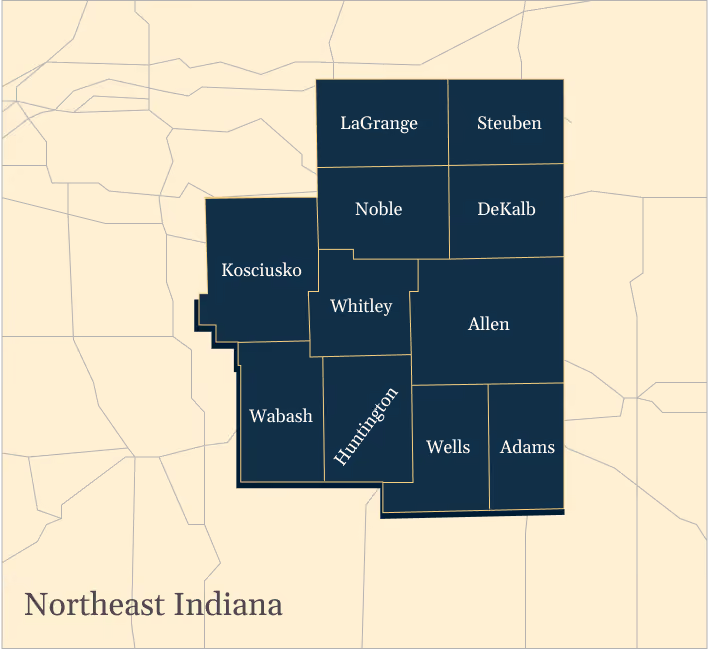
Atendemos a víctimas de accidentes de motocicleta en todo el noreste de Indiana
Nuestra oficina se encuentra en el centro de Fort Wayne. Cuando las lesiones de un motociclista dificultan las reuniones presenciales, realizamos consultas por video.
Representamos a motociclistas lesionados y a sus familias en:
- Condado de Allen
- Condado de Kosciusko
- Condado de Wabash
- Condado de Adams
- Condado de LaGrange
- Condado de Wells
- Condado de DeKalb
- Condado de Noble
- Condado de Whitley
- Condado de Huntington
- Condado de Steuben
- Elkhart County

Theisen Hubley Law
Hable con nuestro experimentado abogado de accidentes de motocicleta en Fort Wayne
No necesita tener su caso resuelto antes de contactarnos. Cuéntenos qué sucedió, cuándo ocurrió y cuál es su situación actual. Nosotros nos encargamos del resto. Le guiaremos a través de los pasos a seguir y le daremos nuestra opinión honesta sobre si tiene una reclamación que valga la pena presentar.
Preguntas frecuentes sobre reclamaciones por accidentes de motocicleta en Fort Wayne
A menudo lo intentan. Algunos ajustadores parten de la suposición de que el motociclista debe haber hecho algo mal. Nosotros respondemos con informes policiales, declaraciones de testigos, análisis de reconstrucción y registros médicos que demuestran lo que realmente sucedió.
La ley de Indiana no exige el uso de casco a los conductores mayores de 18 años, y la ausencia de este no es, por sí sola, motivo para denegar una reclamación. Aun así, una aseguradora podría argumentar que las lesiones en la cabeza habrían sido menos graves con uno, y nosotros contrarrestamos ese argumento con pruebas médicas específicas sobre sus lesiones.
Esto sucede a menudo en casos de accidentes de motocicleta. Los gastos médicos por sí solos pueden superar rápidamente los límites mínimos de responsabilidad civil de Indiana. La cobertura de conductor con seguro insuficiente de su propia póliza puede cubrir la diferencia, y nosotros revisamos con usted todas las pólizas aplicables.
Para la mayoría de las reclamaciones por lesiones en motocicleta en Indiana, el plazo es de dos años a partir de la fecha del accidente. Las reclamaciones por muerte por negligencia también suelen tener un plazo de dos años a partir de la fecha del fallecimiento. Cuanto antes contacte a un abogado, más tiempo tendremos para preservar las pruebas.
Esto es común después de un accidente de motocicleta. La adrenalina puede enmascarar síntomas de tejidos blandos, espalda y conmociones cerebrales. Anote cuándo comenzaron los síntomas, consulte a un médico lo antes posible e infórmenos. Las lesiones de aparición tardía también pueden respaldar una reclamación válida.
Sí. La ley de Indiana otorga a los familiares sobrevivientes el derecho a presentar una reclamación por muerte por negligencia bajo procedimientos específicos. Abordamos estos casos con cuidado y guiamos a las familias a través de cada etapa.