




.avif)
Abogado de incapacidad del Seguro Social
en Fort Wayne, IN
Cuando una condición médica grave le impide trabajar, las facturas no dejan de llegar. La incapacidad del Seguro Social (SSDI y SSI) existe precisamente para esta situación, pero el proceso es largo y los datos de la SSA muestran que aproximadamente 2 de cada 3 solicitudes iniciales son denegadas. En Theisen Hubley Law, ayudamos a nuestros clientes en Fort Wayne a construir el caso más sólido posible en cada etapa, desde la solicitud inicial hasta una audiencia ante un juez de derecho administrativo y más allá.
Reconocimientos y membresías










Cómo ayuda Theisen Hubley Law a los solicitantes de discapacidad en Fort Wayne
Theisen Hubley Law ha representado a los residentes del noreste de Indiana en asuntos de incapacidad del Seguro Social desde 2001. Nuestra firma ha publicado artículos y presentado seminarios sobre el testimonio de expertos vocacionales ante el Colegio de Abogados del Condado de Allen. Esta experiencia es fundamental, ya que la mayoría de las audiencias dependen de cómo se interroga al experto vocacional y de qué tan bien respalde su historial médico sus limitaciones.
Gestionamos reclamaciones de SSDI y SSI en todas sus etapas, desde la solicitud inicial hasta la reconsideración, audiencias ante jueces de derecho administrativo (ALJ), revisión del Consejo de Apelaciones y apelaciones ante tribunales federales de distrito. No hay costos iniciales y la ley federal limita los honorarios de los abogados al 25 por ciento de los beneficios atrasados, los cuales solo se pagan si usted gana el caso.

Tipos de reclamos por incapacidad que manejamos en Fort Wayne
Los beneficios por incapacidad provienen de dos programas federales distintos que funcionan de manera muy diferente. Nuestros abogados de incapacidad en Fort Wayne ayudan a los clientes a identificar qué programa aplica, qué pruebas son necesarias y dónde es más probable que el reclamo sea cuestionado.
Seguro de Incapacidad del Seguro Social (SSDI)
El SSDI es un programa de seguro financiado mediante impuestos FICA. Para calificar, generalmente necesita un historial laboral reciente (típicamente 40 trimestres de cobertura, 20 de ellos ganados en los últimos 10 años) y una condición médica que le impida realizar una actividad lucrativa sustancial durante al menos 12 meses o que se espere que resulte en fallecimiento. Los beneficios se basan en su historial de ingresos previos y, tras un periodo de espera de 24 meses, los beneficiarios pasan a ser elegibles para Medicare.
Seguridad de Ingreso Suplementario (SSI)
El SSI es un programa basado en la necesidad para personas con ingresos y recursos limitados. A diferencia del SSDI, el SSI no requiere un historial laboral previo, lo que lo convierte en el programa pertinente para adultos discapacitados antes de haber acumulado un historial de ingresos sustancial y para niños con deficiencias que califican. Los beneficiarios de SSI en Indiana generalmente obtienen acceso a Medicaid como parte de la aprobación.
Reclamaciones concurrentes de SSDI y SSI
Muchos solicitantes califican para ambos programas al mismo tiempo, especialmente cuando los beneficios de SSDI están por debajo del umbral de ingresos de SSI. Evaluamos la elegibilidad concurrente al inicio de cada caso.
Beneficios para hijos adultos discapacitados (DAC)
Si su hijo quedó discapacitado antes de los 22 años y usted recibe beneficios de jubilación o discapacidad del Seguro Social, su hijo podría calificar para beneficios basados en su historial laboral. Esta es una categoría que a menudo se pasa por alto y que puede significar un apoyo mensual importante para familias con un hijo adulto discapacitado que vive en el hogar.
Reclamaciones de SSI para niños
Los menores de 18 años con deficiencias físicas o mentales graves pueden calificar para SSI si su familia cumple con los límites de ingresos y recursos. El estándar médico para niños difiere del estándar para adultos, y la documentación de maestros, terapeutas y médicos tratantes es fundamental.
Reclamaciones combinadas de discapacidad y compensación laboral
Si su condición discapacitante se originó por una lesión laboral, su reclamación de SSDI se tramita junto con un caso de compensación laboral. Los beneficios de compensación laboral pueden reducir el SSDI según la ley federal, y los acuerdos deben estructurarse cuidadosamente para proteger futuros pagos por discapacidad. Dado que manejamos ambas áreas bajo un mismo techo, coordinamos la estrategia entre ambos casos.
Reclamaciones combinadas de discapacidad y lesiones personales
Si su discapacidad deriva de un accidente grave causado por otra persona, una reclamación de SSDI puede tramitarse paralelamente a un caso de lesiones personales. Un acuerdo indemnizatorio elevado puede afectar la elegibilidad para SSI debido al límite de recursos, y es posible que deban considerarse las reservas para Medicare (Medicare Set-Asides). Coordinamos los tiempos y la estructura para proteger su recuperación integral.
Reclamaciones denegadas y apelaciones
Una denegación no es el final. Los datos de la SSA muestran que la mayoría de las solicitudes iniciales de SSDI y las peticiones de reconsideración son denegadas, mientras que las tasas de aprobación ante un juez de derecho administrativo (ALJ) son sustancialmente más altas, razón por la cual contar con representación en la etapa de audiencia es tan importante.

¿Ya le han denegado la solicitud una vez?
Todavía tiene opciones.
La mayoría de las reclamaciones se deniegan en las dos primeras etapas, y la mayoría de los solicitantes que ganan lo hacen en la fase de audiencia. Díganos en qué etapa se encuentra y qué decía la carta de denegación. Le explicaremos si su caso puede fortalecerse y cuál es el plazo para presentar una apelación.
Qué pruebas son las más importantes en las reclamaciones de SSDI en Indiana
Un caso exitoso de SSDI se construye con documentación, no con afirmaciones. Los registros que hacen avanzar un caso suelen ser:
- Declaraciones del médico tratante: La SSA da peso a las opiniones de médicos con una relación de tratamiento a largo plazo. Una opinión específica sobre la RFC que aborde las limitaciones de esfuerzo y no relacionadas con el esfuerzo suele ser el documento más importante del expediente.
- Informes de especialistas: Las imágenes diagnósticas, las evaluaciones neurológicas, los estudios cardiológicos, las evaluaciones psiquiátricas y las pruebas de función pulmonar tienen peso cuando son interpretadas por un especialista.
- Registros de salud mental: Para las reclamaciones relacionadas con depresión, ansiedad, trastorno de estrés postraumático, trastorno bipolar o deficiencias cognitivas, las notas de tratamiento continuo y las evaluaciones estandarizadas son fundamentales. Las lagunas en el tratamiento de salud mental se utilizan habitualmente para desacreditar la gravedad de los síntomas.
- Informes de funciones y declaraciones de terceros: Una descripción vaga o inconsistente puede socavar un historial médico que, de otro modo, sería sólido. Las declaraciones de familiares, antiguos empleadores o cuidadores pueden corroborar sus limitaciones.
- Historial laboral y registros de ingresos: Las descripciones precisas de trabajos anteriores (exigencias físicas, niveles de habilidad, categorías de esfuerzo) impulsan el análisis del Paso 4. Los títulos de trabajo genéricos no son suficientes.
- Cumplimiento del tratamiento: Las citas perdidas, las recetas no surtidas y el incumplimiento de las recomendaciones médicas se utilizan para argumentar que su afección no es tan limitante como se describe.
La evaluación secuencial de cinco pasos: cómo decide la SSA su reclamación
Según el 20 CFR 404.1520, cada reclamación de SSDI y SSI para adultos se evalúa a través de cinco pasos secuenciales. Comprender estos pasos marca la diferencia entre presentar una solicitud y construir un expediente que cumpla con cada requisito.
Paso 1: Actividad lucrativa sustancial
¿Trabaja usted y obtiene ingresos por encima del umbral de actividad lucrativa sustancial? El límite de SGA para 2026 lo establece la SSA cada año. Si sus ingresos superan esta cantidad, su solicitud será denegada en el paso 1, independientemente de su condición médica.
Paso 2: Impedimento grave
¿Tiene usted un impedimento médicamente determinable que limite significativamente su capacidad para realizar actividades laborales básicas? El impedimento debe estar respaldado por evidencia médica aceptable de una fuente calificada y debe durar o esperarse que dure al menos 12 meses.
Paso 3: Lista de impedimentos
¿Su condición cumple o equivale médicamente a uno de los listados en el Libro Azul de la SSA (20 CFR Parte 404, Subparte P, Apéndice 1)? Si es así, su solicitud es aprobada en el paso 3. La mayoría de las solicitudes no cumplen exactamente con un listado, por lo que los dos pasos siguientes son importantes.
Paso 4: Trabajo relevante anterior
¿Todavía puede realizar alguno de los trabajos que tuvo en los últimos 15 años dadas sus limitaciones actuales? La SSA analiza las exigencias del trabajo anterior, su capacidad funcional residual (RFC, por sus siglas en inglés) y si ambos son compatibles. Si puede volver a su trabajo anterior, la solicitud es denegada.
Paso 5: Otro trabajo en la economía nacional
Si no puede volver a su trabajo anterior, ¿puede adaptarse a otro trabajo que exista en cantidades significativas en la economía nacional, considerando su edad, educación y habilidades transferibles? Aquí es donde interviene el testimonio de un experto vocacional, y la mayoría de las audiencias disputadas se ganan o se pierden en este paso.
Pasos a seguir al solicitar o apelar una discapacidad
Lo que haga en las primeras etapas de una solicitud de SSDI o SSI puede determinar cada etapa posterior.
Comience el tratamiento y manténgalo
Tanto las aseguradoras como la SSA consideran que las interrupciones en el tratamiento son evidencia de que la condición no es grave. Establezca atención con un médico de cabecera y los especialistas necesarios, cumpla con las referencias y documente por qué no puede pagar el tratamiento si el costo es el obstáculo.
Documente sus síntomas por escrito
Un registro simple de los niveles de dolor, efectos secundarios de los medicamentos, episodios de pánico y fatiga crea un historial contemporáneo que es mucho más creíble que un testimonio reconstruido meses después. Estas notas también ayudan a su médico a describir sus limitaciones con precisión cuando la SSA lo solicite.
Tenga cuidado con las redes sociales
Las fotos, videos y registros de ubicación son utilizados habitualmente por contratistas e investigadores de la SSA para cuestionar las limitaciones alegadas. Una sola imagen de un evento familiar puede convertirse en el punto central de un interrogatorio en una audiencia.
Sepa quién decide sobre su solicitud en cada etapa
Las solicitudes iniciales y las peticiones de reconsideración son decididas por la Oficina de Determinación de Discapacidad (DDB) de Indiana bajo contrato con la SSA, y la mayoría de las denegaciones en las primeras etapas provienen de allí. Las apelaciones van a la Oficina de Operaciones de Audiencias de Fort Wayne, donde las tasas de aprobación son sustancialmente más altas.
Esté atento a los plazos de apelación de 60 días
Dispone de 60 días a partir de la notificación de denegación para solicitar una reconsideración, una audiencia ante un juez de derecho administrativo (ALJ) o una revisión del Consejo de Apelaciones. Si el Consejo también deniega la reclamación, tiene 60 días para presentar una demanda ante el Tribunal de Distrito de los EE. UU. para el Distrito Norte de Indiana. No cumplir con cualquier plazo casi siempre significa tener que empezar de cero.
Revise su historial de ingresos antes de presentar la solicitud
El historial de ingresos de la SSA a veces está incompleto o es incorrecto. Presentar la solicitud sin confirmar que su historial laboral se refleja con precisión puede costarle tanto el estatus de asegurado como el monto de sus beneficios. Nosotros obtenemos el registro al inicio de cada caso.
Consiga un abogado antes de la etapa de audiencia
Contar con representación en la solicitud inicial es útil, pero es mucho más importante en la audiencia ante el ALJ. Las audiencias avanzan rápidamente, los expertos vocacionales no son testigos neutrales y la mayoría de los reclamantes sin representación no interrogan eficazmente el testimonio que decide su caso.
#cta_start
¿Recibió una carta de denegación? Primero lea el plazo.
Toda carta de denegación de la SSA incluye un plazo de 60 días para apelar. No cumplirlo suele reiniciar todo el proceso. Traiga la carta de denegación a nuestra consulta gratuita y le diremos cuál es el siguiente paso.
#cta_end
Por qué elegir a Theisen Hubley Law
para su caso de SSDI
Los solicitantes de discapacidad en todo el noreste de Indiana acuden a nosotros porque abordamos el SSDI con la misma preparación y atención que dedicamos a los litigios.
Lo que dicen nuestros clientes
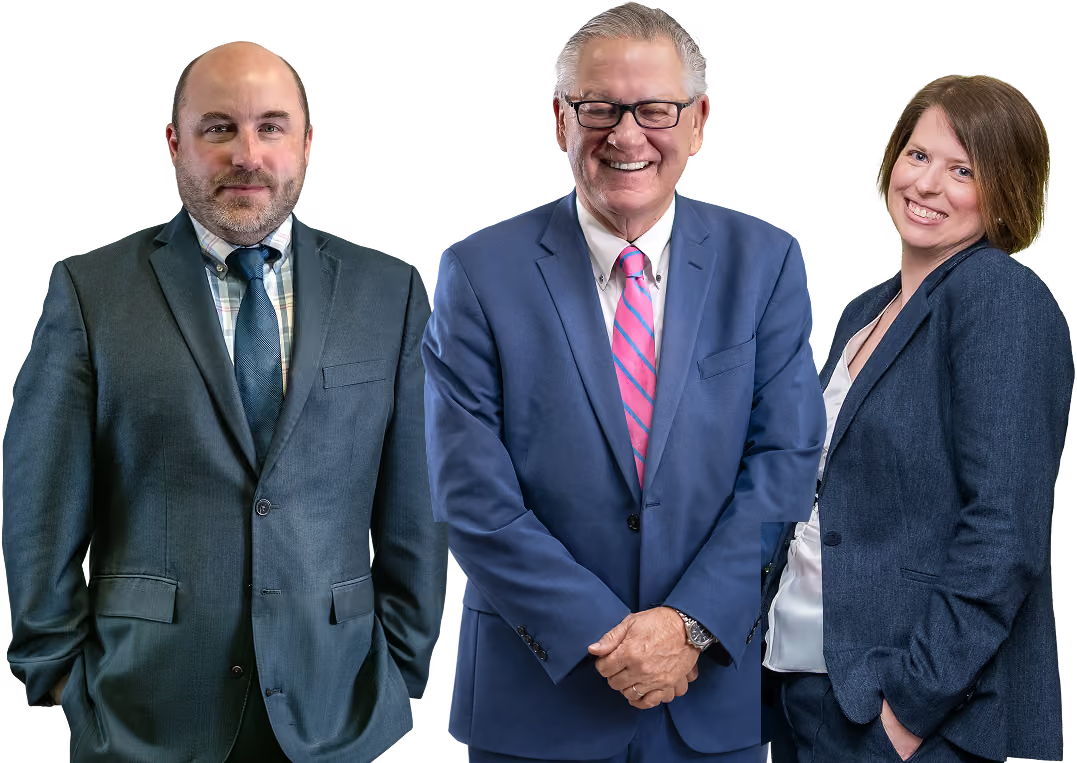
Conozca a los abogados detrás de su solicitud de discapacidad
Nuestros abogados aportan décadas de experiencia a las cuestiones médicas, vocacionales y procesales que determinan los resultados del SSDI. Desde la solicitud inicial hasta las audiencias ante el juez de derecho administrativo (ALJ) y las apelaciones ante tribunales federales, el mismo equipo se encarga de su caso.
-

John C. Theisen
Abogado -

Nathaniel O. Hubley
Abogado -

Christina R. Hubley
Abogada
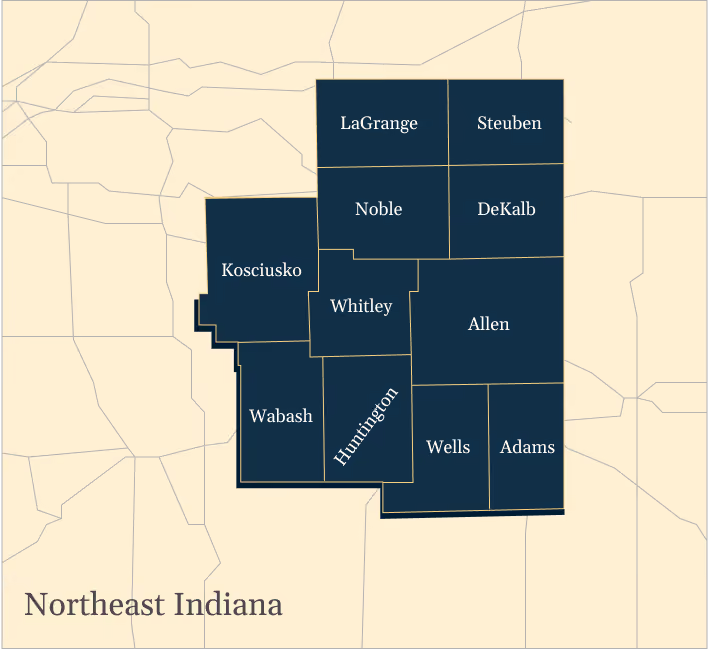
Ayudamos a solicitantes de discapacidad en todo el condado de Allen y el noreste de Indiana
Nuestra oficina se encuentra en el centro de Fort Wayne y ofrecemos consultas telefónicas y por video para clientes cuyas condiciones dificultan el traslado.
Representamos a solicitantes de SSDI y SSI en todo:
- Condado de Allen
- Condado de Kosciusko
- Condado de Wabash
- Condado de Adams
- Condado de LaGrange
- Condado de Wells
- Condado de DeKalb
- Condado de Noble
- Condado de Whitley
- Condado de Huntington
- Condado de Steuben
- Elkhart County

Theisen Hubley Law
Póngase en contacto con nuestro equipo de discapacidad en Fort Wayne
El proceso de SSDI es largo, técnico y difícil de manejar por su cuenta. Cuéntenos sobre su condición, en qué etapa del proceso se encuentra y qué le ha dicho la SSA hasta ahora. Revisaremos su situación y le diremos si podemos ayudarle, sin costo ni compromiso alguno.
Preguntas frecuentes sobre reclamaciones de SSDI y SSI en Fort Wayne
El SSDI es un programa de seguro financiado mediante impuestos sobre la nómina que requiere un historial laboral reciente. El SSI es un programa basado en la necesidad para personas con ingresos y recursos limitados, sin requisitos de historial laboral. Muchos solicitantes califican para ambos.
Las decisiones iniciales a través de la Oficina de Determinación de Discapacidad de Indiana suelen tardar de tres a seis meses, y la reconsideración añade otros tres a cinco meses. Las audiencias ante un juez de derecho administrativo (ALJ) dependen de la agenda de la Oficina de Operaciones de Audiencias de Fort Wayne, por lo que el tiempo total desde la presentación hasta la audiencia puede ser de un año o más.
Los casos de SSDI se manejan bajo honorarios de contingencia según el artículo 42 U.S.C. 406. Los honorarios están limitados al 25 por ciento de los beneficios atrasados hasta un máximo federal y deben ser aprobados por la SSA. No debe nada si su reclamación no genera beneficios atrasados.
La mayoría de las solicitudes iniciales son denegadas. El siguiente paso es solicitar una reconsideración dentro de los 60 días posteriores a la denegación. NO presente una nueva solicitud después de la denegación. Eso reinicia su caso y podría perder una cantidad significativa de pagos atrasados si finalmente gana. Si esa solicitud también es denegada, el caso pasa a una audiencia ante un juez de derecho administrativo (ALJ), donde las tasas de aprobación son sustancialmente más altas.
No existe una lista fija. La SSA evalúa si su condición, combinada con su edad, educación e historial laboral, le impide realizar una actividad lucrativa sustancial durante al menos 12 meses. Las condiciones calificables comunes incluyen trastornos musculoesqueléticos, cardiovasculares, neurológicos y de salud mental graves.
Es posible trabajar de forma limitada, pero los ingresos que superan el umbral de actividad lucrativa sustancial pueden resultar en la denegación o terminación de los beneficios. Revise cualquier plan de trabajo con nosotros antes de que sus ingresos superen dicho umbral.