





Workers’ Compensation Attorney
A crushed hand on a press line. A back injury from one too many lifts in a New Haven warehouse. The insurance carrier's first move is rarely to just pay. As experienced workers' compensation attorneys, Theisen Hubley Law pushes back when Allen County work injury claims get denied, delayed, or undervalued.
Honors & Memberships










How Theisen Hubley Law Handles New Haven Workers' Comp Claims
Workers' comp claims are rarely simple. Insurance carriers often dispute injuries, delay approvals, or reduce impairment ratings. A claim doesn't move forward on its own. That's why hiring the right workers' compensation lawyer in New Haven, IN, matters from the start. Theisen Hubley Law has served Allen County and New Haven since 2001, and we know where these disputes tend to happen before they happen.
We take cases from the Application for Adjustment of Claim through a hearing before a Single Hearing Member, if needed, handling wage disputes, medical authorization fights, and PPI rating challenges along the way. If your injury also involved a subcontractor, a piece of defective equipment, or negligence from another driver, we look at whether a separate personal injury claim is available on top of your comp benefits so we can maximize the amount of compensation you receive.

New Haven Work Injury Cases We Take On
The local job base shapes the injuries we handle. Cases we regularly take on include:
Workplace Injuries
Whether the accident happened in an instant or the condition developed over months on the job, we handle claim denials, disputed medical treatment, permanent disability disputes, and retaliation after an employee files for benefits. Not every injury looks like an accident on the surface, and our New Haven workers’ compensation attorneys take on both kinds.
Manufacturing and Plant Injuries
New Haven is home to steel, copper, and molded-parts manufacturers, which means real exposure to presses, conveyors, and heavy equipment. We've represented workers hurt in machine entanglements, crush injuries, and equipment failures on the plant floor.
Warehouse and Distribution Center Injuries
Forklift accidents, falling inventory, and repetitive lifting injuries are everyday risks in warehouses and distribution centers. Strains that seem minor at first can turn into lasting back, shoulder, or knee problems that limit what work you can do.
Construction Accidents
Falls, scaffolding failures, and electrical accidents happen regularly on job sites across the area. Because several contractors and equipment suppliers are often on-site at once, these cases frequently support both a workers' comp claim and a third-party injury claim.
Slip, Trip, and Fall Injuries
A fall on a wet floor or an unmarked hazard at work can cause serious spine, hip, or head injuries. When an outside contractor or property owner created the hazard, a third-party claim may run alongside the workers' comp case.
Repetitive Stress and Occupational Injuries
Carpal tunnel, rotator cuff tears, and herniated discs from repeated motion or lifting are compensable under Indiana law, even though carriers frequently try to call them "pre-existing". That's exactly the kind of dispute we take on.
On-the-Job Vehicle Accidents
Drivers, technicians, and sales staff injured in a crash while working may have both a workers' comp claim and a personal injury claim against the at-fault driver. We sort out which benefits come from which claim so nothing gets left on the table.
Occupational Disease and Exposure Claims
Years of exposure to chemicals, dust, or repetitive trauma can lead to a claim under Indiana's Occupational Diseases Act. These cases rely heavily on documentation and often on expert medical testimony.
Catastrophic and Fatal Workplace Injuries
A traumatic brain injury, spinal cord injury, amputation, or workplace death changes a family's life instantly. Indiana provides specific death benefits for surviving dependents. Our skilled attorneys in New Haven use their advanced knowledge to help families pursue every available avenue for recovery.

You Handle the Recovery.
Let Us Handle the Fight.
A workplace injury is hard enough to recover from without also having to fight an insurance company. Our skilled workers’ comp lawyers take that part off your hands.
What Indiana Law Actually Pays Injured Workers
Indiana's workers' comp system doesn't require you to prove your employer did anything wrong, only that the injury happened out of and in the course of your job. Once that's established, several types of benefits come into play, and it's worth knowing all of them, since carriers don't always volunteer the full list.

- Medical benefits: The carrier pays every reasonable, necessary cost tied to the injury, such as doctor visits, hospital stays, surgery, medication, and physical therapy sessions. The carrier picks the treating physician, though you can push back if that doctor isn't treating you properly.
- Temporary Total Disability (TTD): Once a doctor takes you off work entirely, you're owed roughly 66.67% of your average weekly wage under Indiana Code § 22-3-3-8, up to a statutory cap, until you're either released or reach Maximum Medical Improvement.
- Temporary Partial Disability (TPD): If you're cleared to work but only at reduced hours or pay, TPD covers part of that difference while you're still recovering.
- Permanent Partial Impairment (PPI): Once you hit Maximum Medical Improvement, your doctor rates the degree of permanent impairment, and that number becomes a major factor in your settlement. Carriers often lowball this number, which is why a second opinion is worth getting.
- Permanent Total Disability (PTD): For injuries severe enough to end any realistic chance of returning to gainful work, PTD provides ongoing wage replacement rather than a fixed cutoff.
- Death benefits: If a workplace injury is fatal, Indiana requires the carrier to pay burial costs and ongoing wage-based benefits to the worker's surviving dependents.
- Vocational rehabilitation: If you can't go back to your old job, Indiana law provides for retraining toward work you're actually able to do.
What to Do After a Workplace Injury in New Haven, IN
What you do in the hours and days right after an injury can shape the whole claim. Here's what we tell every client:
1. Notify Your Employer Right Away
Indiana law requires written notice within thirty days of the accident, and waiting can hurt your claim. Oral notice to a coworker isn't reliable proof, so put it in writing to your supervisor or HR the same day if you can.
2. See a Doctor Even If the Injury Feels Minor
Repetitive strain and joint injuries common in manufacturing and warehouse work don't always show their full extent immediately. A same-day medical record is also what ties the injury to your job from day one, which matters if the claim is ever disputed.
3. Stick to Your Treatment Plan
Insurers may use missed visits to cut off benefits. Even a single skipped appointment can become the carrier's excuse to argue you're not really hurt.
4. Keep a Paper Trail
Keep copies of every form, denial letter, and payment notice you receive from the insurance carrier. Carriers sometimes claim a form was never sent or a deadline was missed, and your own copies are the easiest way to prove otherwise.
5. Talk to Us Before You Sign Anything

Talk to our experienced New Haven workers’ comp lawyers before you sign anything from the insurance company or agree to a settlement. Once you sign a release, reopening the claim later is difficult even if your condition worsens, so a quick call first costs you nothing and protects everything.
The Legal Rules Behind Every Indiana Comp Claim
A few rules shape almost every claim we handle, and knowing them upfront helps you avoid the mistakes that cost workers benefits.
The 30-Day Reporting Window
Indiana requires notice of a work injury within 30 days. Written notice is safest, though oral notice can work in some situations. Wait past that window, and you've given the carrier an opening to dispute that the injury happened on the job at all.
The Two-Year Filing Deadline
Under Indiana Code § 22-3-3-3, the clock for filing an Application for Adjustment of Claim with the Indiana Workers' Compensation Board generally runs two years from the injury date. Occupational disease cases work a little differently, since the two years can start from whenever you reasonably should have connected the condition to your job, not from your last day working.
Workers' Comp Is Your Exclusive Remedy Against Your Employer
Under Indiana Code § 22-3-2-6, you generally can't sue your employer directly for a workplace injury. What that rule doesn't touch is a negligent outside party, a subcontractor, an equipment manufacturer, or another company on the job site, who can still be sued in a separate personal injury claim. This distinction comes up often in New Haven's plants and warehouses, where several contractors and vendors may share the same floor.
Your Employer Picks Your Doctor First
Indiana lets the employer's carrier choose your treating physician at the outset, and going outside that network without approval can leave you responsible for the bill. Limited paths exist to change physicians, and we use our advanced workers’ comp knowledge to change the assigned doctor if they aren't treating the injury properly.
You Can Request an Independent Medical Exam

Both sides can request an independent medical examination. When the carrier's doctor lowballs your impairment rating or clears you to return to work too soon, an IME from a qualified physician can change the result.
Light Duty Comes with Real Consequences
If your doctor releases you to light duty, your employer can generally require you to try it, and refusing without a medical reason puts your benefits at risk. We step in when a light-duty offer doesn't match your actual restrictions.
Third-Party Injury Claims in New Haven Workers' Comp Cases
Workers' comp covers medical bills and partial lost wages, but not pain and suffering. If a subcontractor, delivery driver, equipment manufacturer, or other outside party caused the accident, a separate third-party claim can recover what comp leaves out.
The two claims run together, not instead of each other. Under Indiana Code § 22-3-2-13, your carrier holds a subrogation lien on any third-party settlement, so it gets reimbursed from that recovery. We handle both claims together to protect what you keep.
What Our Clients Say
The Attorneys Who'll Actually Work Your Case
-

John C. Theisen
Attorney -

Nathaniel O. Hubley
Attorney -

Christina R. Hubley
Attorney
Why New Haven’s Injured Workers Trust Theisen Hubley Law
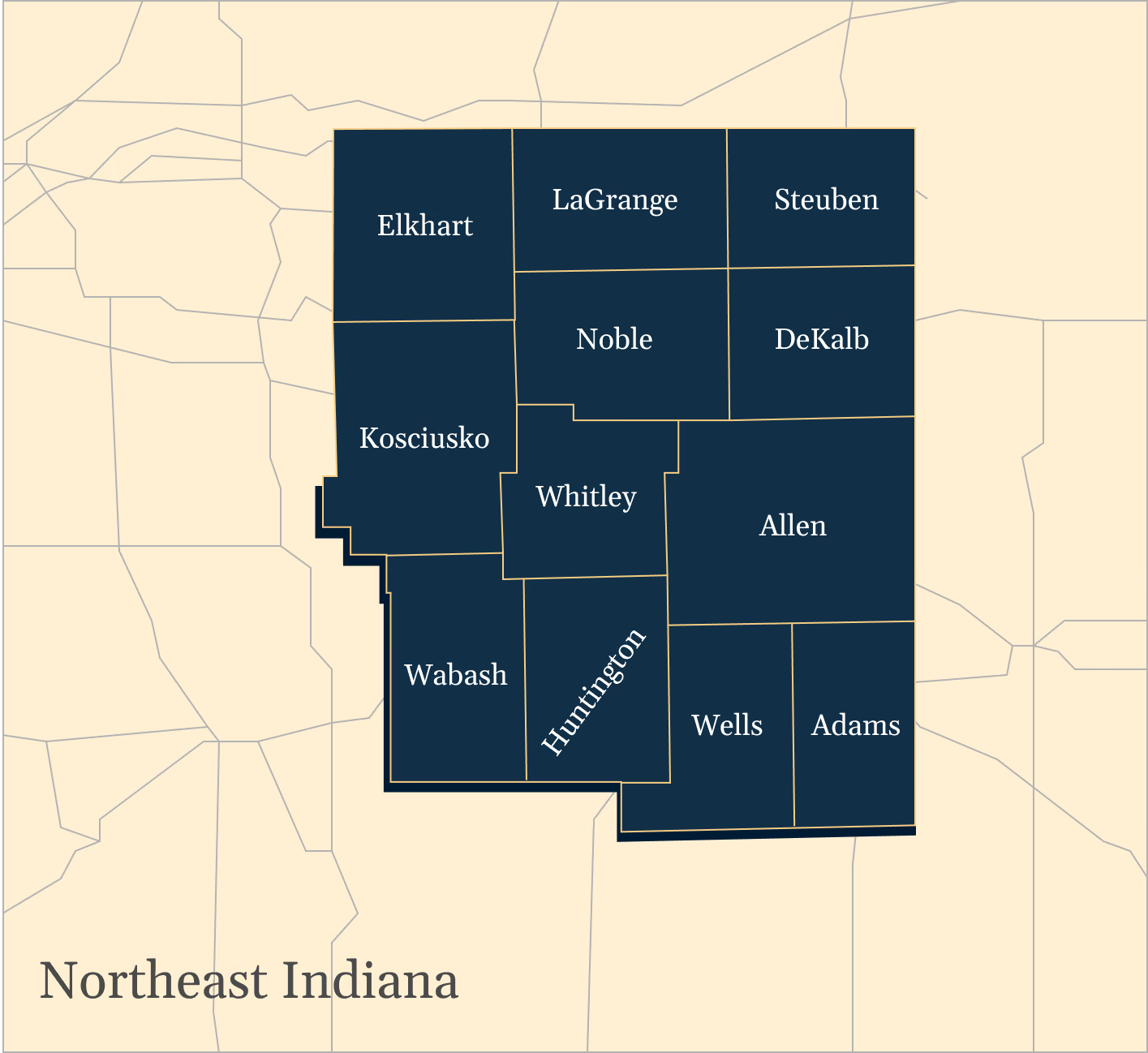
Serving Allen County and All of Northeast Indiana
We're based in downtown Fort Wayne, close enough to New Haven for an in-person meeting when you want one, and set up for video calls when travel isn't realistic for someone recovering from an injury.
We represent injured workers throughout:
- Allen County
- Kosciusko County
- Wabash County
- Adams County
- LaGrange County
- Wells County
- DeKalb County
- Noble County
- Whitley County
- Huntington County
- Steuben County
- Elkhart County

Theisen Hubley Law
Start a Conversation
About Your Claim
Whether you're just starting to look for an exceptional New Haven workers' compensation lawyer or you're already mid-claim, give us the short version: what happened and when, and whatever your employer or their insurer has already said to you. We'll tell you straight whether there's a claim worth building.
Questions Our Clients Ask Us Most
Common reasons include disputes over whether the injury is work-related, late reporting, claims that the condition was pre-existing, and disagreements over employment classification. A denial isn't final. From here, the appeal path runs through filing a formal Application for Adjustment of Claim, a hearing before a Single Hearing Member, and, if that doesn't resolve it, an appeal to the Full Workers' Compensation Board.
Yes. Workers' comp keeps you from suing your employer, but not a negligent third party, such as another driver, a subcontractor, an equipment manufacturer, or a property owner. A third-party claim can recover pain and suffering and full lost wages that comp doesn't cover, though the carrier's subrogation lien means the two claims have to be coordinated.
The Workers' Compensation Act protects you from being fired, demoted, or otherwise punished for filing, and if that happens to you, it's grounds for a claim separate from the injury itself.
You're entitled to a second opinion through an independent medical examination. If you return to work before you're ready, you risk worsening the injury and weakening your claim, so talk to our knowledgeable attorneys before agreeing to an early release.
It depends on the severity and permanence of the injury, your average weekly wage, your PPI rating, future medical needs, and whether a third-party claim is also available. Our skilled workers' compensation attorneys in New Haven, IN, will use our advanced knowledge to walk you through it during a free consultation.