





.avif)
Workplace Injury Lawyer
in Fort Wayne, IN
One accident at work can undo everything in an instant. One moment you're finishing a shift at a warehouse near I-469 or a shop off Coliseum Boulevard, the next you're holding forms, a case number, and no clear answer about whether that's everything you're owed. Our Fort Wayne workplace injury lawyers look beyond the comp file and pursue every option available under Indiana law.
Honors & Memberships










How Theisen Hubley Law Helps Fort Wayne Workplace Injury Clients
Theisen Hubley Law has represented injured workers across Fort Wayne and Northeast Indiana since 2001, with recognition from Super Lawyers, Best Lawyers, and the Million Dollar Advocates Forum. Indiana Workers' comp covers your medical bills and part of your wages, but by law, it stops there, and most injured workers never find out whether a second claim against an outside party existed until it's too late to file one.
We look at every workplace injury from both directions: we handle the comp filing so your medical care and wage benefits keep moving, and we investigate whether a subcontractor, supplier, or other outside party contributed to what happened. Our goal is straightforward: everything your employer and the comp system owes you, plus anything an outside third party owes on top of it.

Common Ways Outside Parties Cause Workplace Injuries
Not every workplace accident traces back to the employer. Our Fort Wayne workplace injury attorneys regularly find a second responsible party in cases like these:
Defective Machinery, Tools, and Equipment
Many workplace injuries trace back to a machine, tool, or safety guard that failed, rather than to the way an employee used it. When a manufacturer, distributor, or equipment rental company put a defective product into a Fort Wayne workplace, a product liability claim against that company can run alongside a comp file.
Multi-Employer and Subcontracted Worksites
A single site often has workers from several different companies at once: a staffing agency, a subcontractor, a delivery vendor, all working side by side. When a crew member from one of those outside companies causes an injury, the employee's own employer isn't at fault, and that opens the door to a separate claim against the outside company.
Vehicles and Traffic from Other Companies
Warehouse floors, loading docks, and job sites see constant vehicle traffic from delivery drivers, forklift operators from another vendor, and drivers passing through who don't work for the same company as the injured employee. A forklift operator employed by another business, or a delivery driver making a drop-off at the workplace, can create liability separate from the employee's own employer.
Unsafe Conditions Left by an Outside Contractor
Cleaning crews, maintenance vendors, and property management companies are often responsible for keeping a workplace safe, and when one of them misses a spill, a broken rail, or exposed wiring, the resulting injury may point to that outside company rather than the employer. Building owners who lease space to a business also have separate responsibilities for the property's condition.
Materials and Products Supplied by a Vendor
Chemicals, raw materials, and packaged goods arrive at a workplace from outside suppliers, and mislabeled containers, contaminated shipments, or defective packaging can injure workers who had no way of knowing the risk. A claim against the supplier is separate from anything workers' comp provides for the injury itself.
Was Someone Besides
Your Employer Involved?
Many injured workers assume the comp file is the end of the story. Tell us what happened, including who else was on site, and we'll tell you honestly whether there's more available.
Injuries We See in Fort Wayne Workplace Injury Claims
Workplace injuries range from a single traumatic event to harm that builds up over months of repeated strain, and our Fort Wayne workplace injury lawyers see the full range of severity depending on the job and the industry.
- Traumatic brain injuries from falls or being struck by equipment.
- Spinal cord injuries and herniated discs from lifting or falls.
- Crush injuries and amputations involving machinery or heavy equipment.
- Severe burns from chemical exposure, electrical work, or equipment failure.
- Broken bones and fractures from falls or being struck by objects.
- Repetitive stress injuries, including carpal tunnel syndrome and tendonitis.
- Hearing loss from prolonged exposure to loud machinery.
- Respiratory damage from chemical fumes, dust, or toxic exposure.
- Psychological trauma following a serious workplace accident.
What a Third-Party Workplace Injury Claim Can Recover
Workers' comp pays a portion of your wages and covers your medical bills, but Indiana law caps both, and it never pays for pain and suffering at all. A claim against an outside party operates under different rules and can reach categories that comp was never designed to touch, including:
- Full wage loss, not the roughly two-thirds comp provides.
- Pain and suffering tied to the injury and its lasting effects.
- Loss of enjoyment of favorite activities or hobbies the injury now prevents.
- Loss of consortium for a spouse affected by your injury.
- Punitive damages in rare cases involving reckless or intentional conduct by the outside party.
Because a comp claim and an outside-party claim often move forward together, we track how one affects the other so a comp lien doesn't quietly erase the benefit of pursuing a second, third-party lawsuit.
Steps to Protect Your Outside-Party Claim After a Work Injury
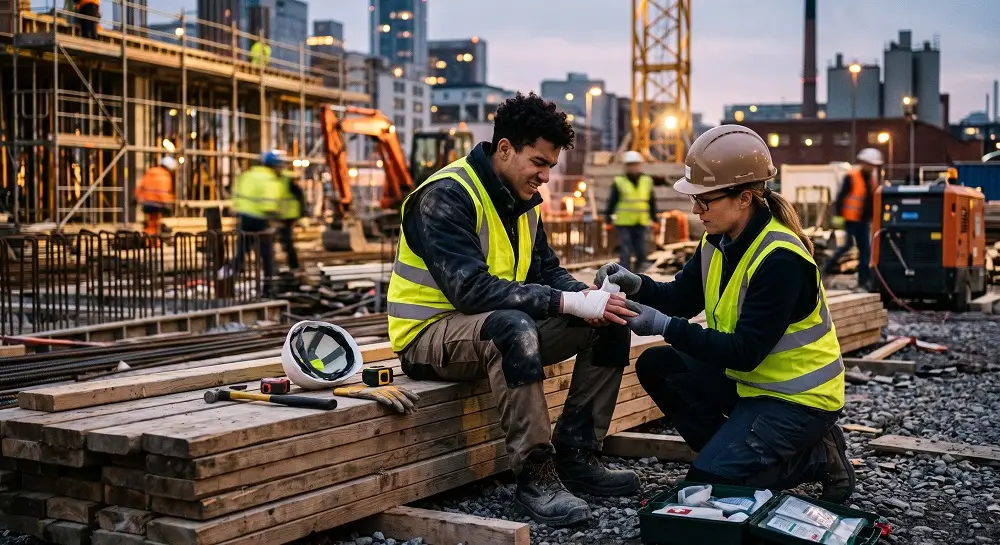
The evidence that supports a claim against an outside party can disappear fast, often faster than anything tied to your comp claim. Here's what protects it:
1. Note Every Company Present, Not Just Your Employer
Write down which crews, vendors, or delivery drivers were on scene, since a claim against an outside party depends on identifying who they were and who employs them. A supervisor's incident report often lists only the employee's own company, so this detail can disappear quickly.
2. Preserve the Machine, Tool, or Vehicle Involved
Ask that any equipment tied to the accident be set aside rather than repaired or returned to service. Once a machine goes back into rotation or a rented tool goes back to the supplier, the physical evidence on which a product liability claim depends may be gone.
3. Collect Contact and Insurance Details from the Outside Party
Get the name, employer, and insurance information for anyone from outside your company who was involved, the same way you would after a car crash. Your own employer's HR department generally won't gather this for you, since their focus stops at the comp file.
4. File Your Workers' Comp Claim on Its Normal Track
Report the injury to your employer and follow the standard comp process for medical care and wage benefits. A separate claim against an outside party runs alongside comp, not instead of it, so nothing about protecting your comp benefits should be paused.
5. Decline Recorded Statements from an Outside Insurer
If a subcontractor's, supplier's, or driver's insurance company reaches out for a statement, hold off until you've spoken with an attorney. These calls, unlike calls from your own comp adjuster, are aimed at limiting a payout you may not know exists yet.
6. Track Two Separate Deadlines
Indiana gives you a limited window to report a work injury to your employer and a separate two-year period to file a lawsuit against an outside party. If you miss either one, you can lose money you'd otherwise recover, so both dates need attention from day one.
7. Bring in a Firm That Can Work Both Types of Cases
A lawyer who only handles comp claims may never flag the outside party at all, and an attorney who only handles injury lawsuits may miss how the comp lien affects your final number. Theisen Hubley Law coordinates both pieces so nothing gets missed and nothing gets double-counted.
Indiana Law on Outside-Party Workplace Injury Claims
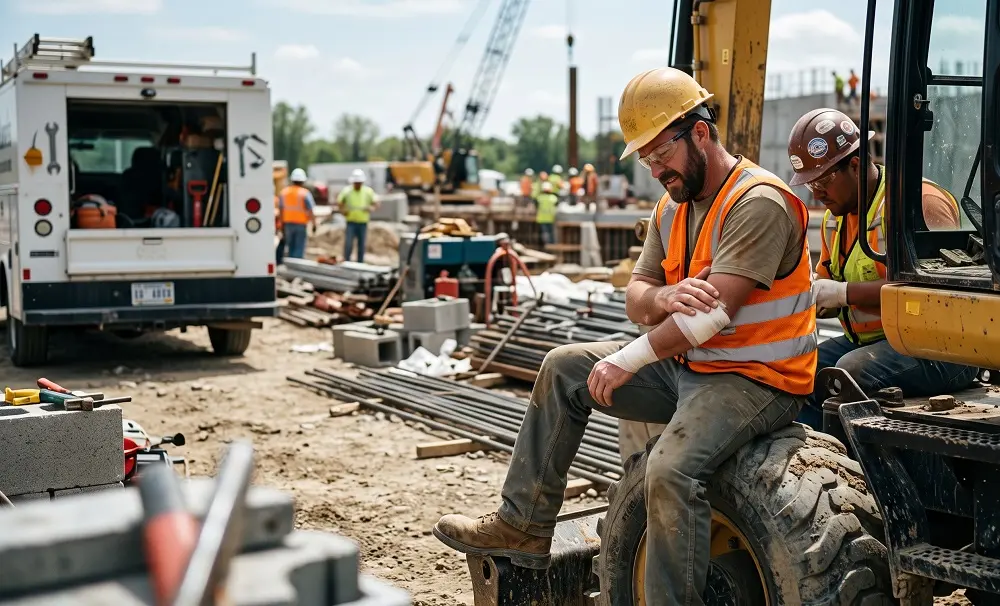
Knowing where comp ends and an outside claim begins can change the outcome of your case.
The Exclusive Remedy Rule Has a Limit
Indiana law generally bars an injured employee from suing their employer for a workplace accident, and workers' comp benefits serve as the only remedy against that employer under Indiana Code 22-3-2-6. That rule stops at the employer's front door. It does not extend to a subcontractor, supplier, property owner, or any other outside company whose conduct contributed to the injury.
A Two-Year Window to File
Indiana Code 34-11-2-4 generally sets a two-year statute of limitations on personal injury claims, and a third-party workplace injury lawsuit is no exception. Many workers wait to see how the comp claim plays out before addressing the outside claim, and that delay is a common and costly mistake.
The Comp Carrier's Right to Reimbursement
When a third-party claim succeeds after comp has already paid medical bills or wage benefits, Indiana law generally gives the comp carrier a right to reimbursement from that recovery. A workplace injury attorney familiar with both sides of a claim can push back on an inflated lien so more of the recovery reaches you.
Fault Gets Divided, Not Eliminated
Indiana follows a modified comparative fault standard in personal injury claims, meaning you can still recover against an outside party even if you share some responsibility for the accident, as long as your share doesn't exceed 50 percent. Your total recovery gets reduced by your percentage of fault, so an insurer's early estimate of your share is worth challenging rather than accepting.
Shared Job Sites Carry Shared Responsibility
On sites where several companies work side by side, a general contractor, property owner, or other company can assume safety obligations for workers who aren't on its payroll. Federal safety citations issued under OSHA's Multi-Employer Citation Policy don't decide a civil case on their own, but they can serve as one piece of evidence when a claim against an outside party proceeds.
Why Fort Wayne Workers Trust Us with These Cases
What Our Clients Say
The Attorneys Behind Your Case
A case involving workers’ comp and a third party involves different legal knowledge and skill, and our workplace injury lawyers in Fort Wayne bring both to the table.
-

John C. Theisen
Attorney -

Nathaniel O. Hubley
Attorney -

Christina R. Hubley
Attorney
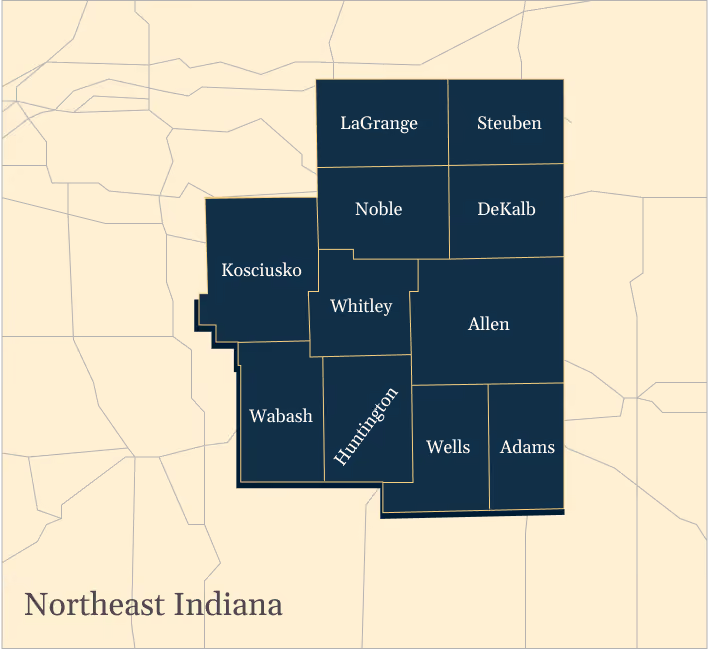
We Represent Workers Across Northeast Indiana
Our office sits in downtown Fort Wayne, and we meet with clients virtually when travel is hard after an injury. We take on outside-party workplace injury claims for workers throughout:
We represent injured workers throughout:
- Allen County
- Kosciusko County
- Wabash County
- Adams County
- LaGrange County
- Wells County
- DeKalb County
- Noble County
- Whitley County
- Huntington County
- Steuben County

Theisen Hubley Law
Ready to Find Out What Your Work Injuries Are Actually Worth?
Tell us the basic facts, including who else was on scene, and our exceptional Fort Wayne workplace injury attorneys will tell you plainly whether a second claim against an outside party is worth pursuing.
Common Questions About Outside-Party Workplace Claims
Yes. Indiana law allows an injured worker to receive comp benefits from their employer's workers’ compensation insurer while also pursuing a claim against a third party whose negligence contributed to the accident. The two claims move on different tracks and typically settle at different times, but one can affect the other. That’s why it’s so important to have attorneys with the advanced knowledge to provide excellent representation in both cases.
Often, yes, at least in part. Indiana law generally gives the workers’ comp carrier a right of reimbursement (or subrogation right) from a third-party personal injury settlement for benefits it already paid, though the amount can sometimes be reduced through negotiation, and an attorney can review whether the lien being asserted against you was calculated correctly.
No. A federal safety citation can support a claim when one exists, but many valid claims move forward without one, based on witness accounts, maintenance records, and physical evidence from the accident itself.
That's a common starting point, not a barrier. Tell us what you remember about the people, equipment, and companies present, and we'll look into whether an outside party played a role before you rule anything out.